Land regeneration is the practice of working with natural systems to rebuild soil, restore the water cycle, and bring degraded land back to life. On rural and estate properties across Northern California, it is some of the most rewarding work we do—and the results compound year after year.
Start with water
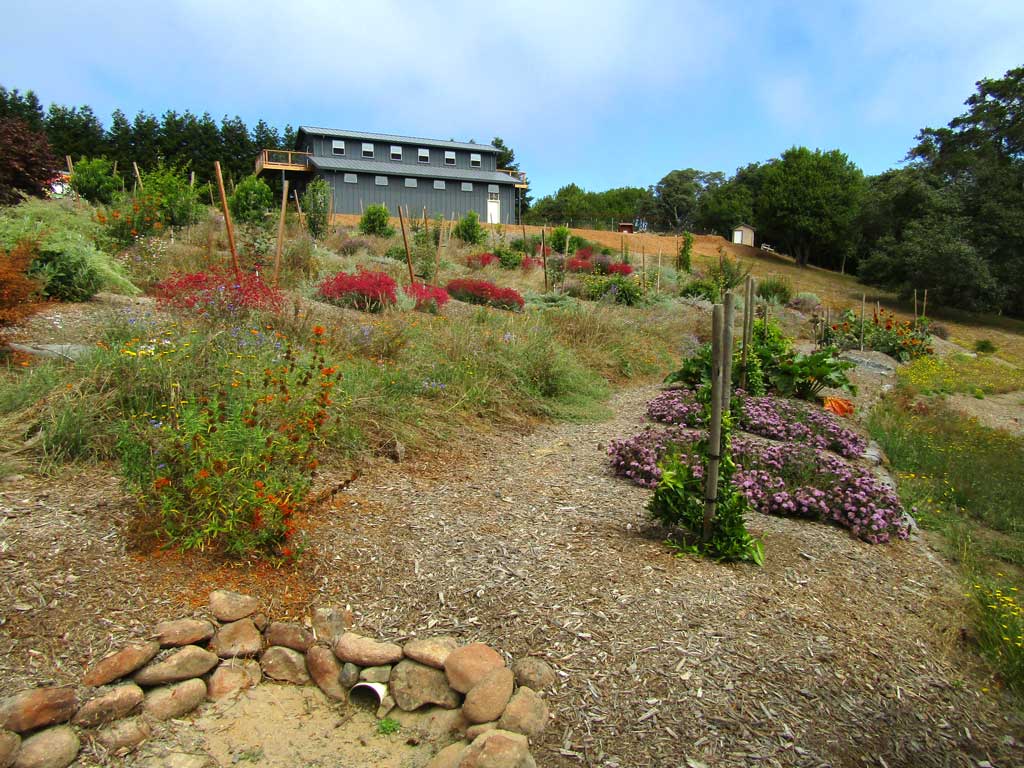
Most degraded land sheds water rather than absorbing it. By shaping the land with swales, rain gardens, and keyline patterns, we slow runoff, spread it across the landscape, and let it sink into the soil—recharging groundwater and drought-proofing the property over time.
Rebuild soil biology
- Compost and mulch to feed soil life and hold moisture.
- Cover crops and perennial roots to build structure and organic matter.
- Minimal disturbance so the soil food web can establish.
Healthy soil is the engine of a regenerative landscape—it stores water, feeds plants, and locks away carbon.
Let the land lead
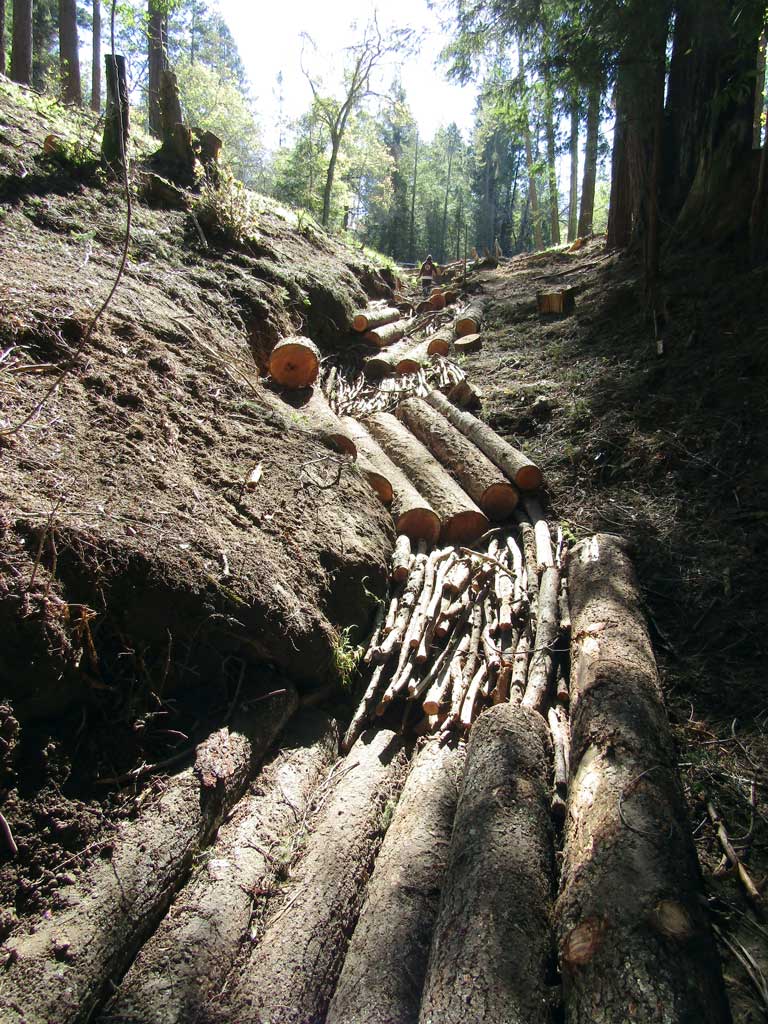
Regeneration is not a single installation; it is a relationship with a property over time. We observe how water moves, where soil is building, and how plant communities respond, then adjust. After the Tubbs Fire, we helped Santa Rosa landowners repurpose dead trunks for erosion control and build swales that brought their land back healthier than before.